
By Nicole Au
Following the dismissal of Hannes Meyer in 1930, the appointment of leading avant-garde architect Ludwig Mies van der Rohe as the third and final director of the school marked the final stage of the Bauhaus movement. During his brief time as director, Mies van der Rohe discontinued the school’s manufacture of goods, but placed a greater emphasis on architecture within the curriculum. By 1932, the National Socialists—who had steadily gained increasing power and influence in German politics—gained control of the Dessau city council, and forced the closure of the school. Mies van der Rohe attempted to continue to lead the school as a private institution by moving the Bauhaus school to Berlin, where it continued to operate in a dilapidated factory for a brief 10 months without Nazi interference. Soon enough, the school began to face increasing pressure from Nazis, who firmly rejected Bauhaus’ divergence from Germanic tradition, and criticised the movement as a supposed front for communists. The Bauhaus school was permanently closed by Nazi authorities in April 1933, and the Bauhaus was dissolved a few months later on 10 August 1933.
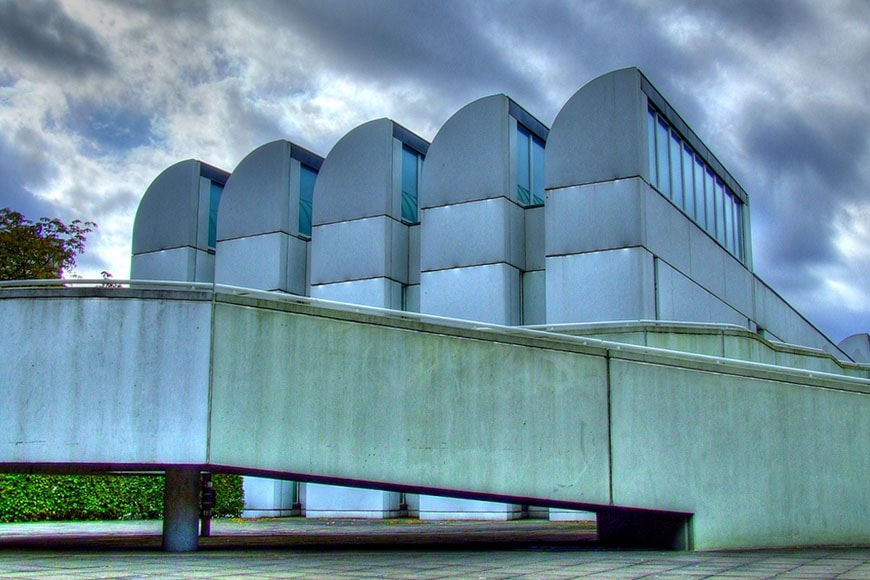
Despite its short lived period, Bauhaus stands as one of the most influential modern movements of all time, with the reverberations of its impact still felt today all over the world. During World War II, members of the Bauhaus faculty proceeded to flee Germany—many of which arrived in America, and continued to endorse the school’s teachings and philosophies. Notable members of the school, including Walter Gropius and Marcel Breuer established a major presence in the United States, designing a great number of landmarks exemplifying Bauhaus principles across the nation. The Bauhaus ‘diaspora’ influenced a new generation of architects and designers, which eventually led to the beginnings of other major architectural movements, including Midcentury Modern, and the International Style.
 HOME | Archive