
By Matthew Chan
Glass has long been a core ingredient in architecture and construction, due to its ability to create a border between indoors and outdoors but simultaneously letting light pass into the interiors, illuminating the environment and changing the nature of spaces inside buildings. The modernism movement in architecture is partly marked by the invention of plate glass, large and seamless panes which match the detail-reduced and functional properties of the style. As the world of architecture continues to develop, more people have begun to experiment with glass, further pushing the boundaries of what this construction material can bring to the table. New technologies have allowed for a more diverse spectrum in how glass can be crafted.
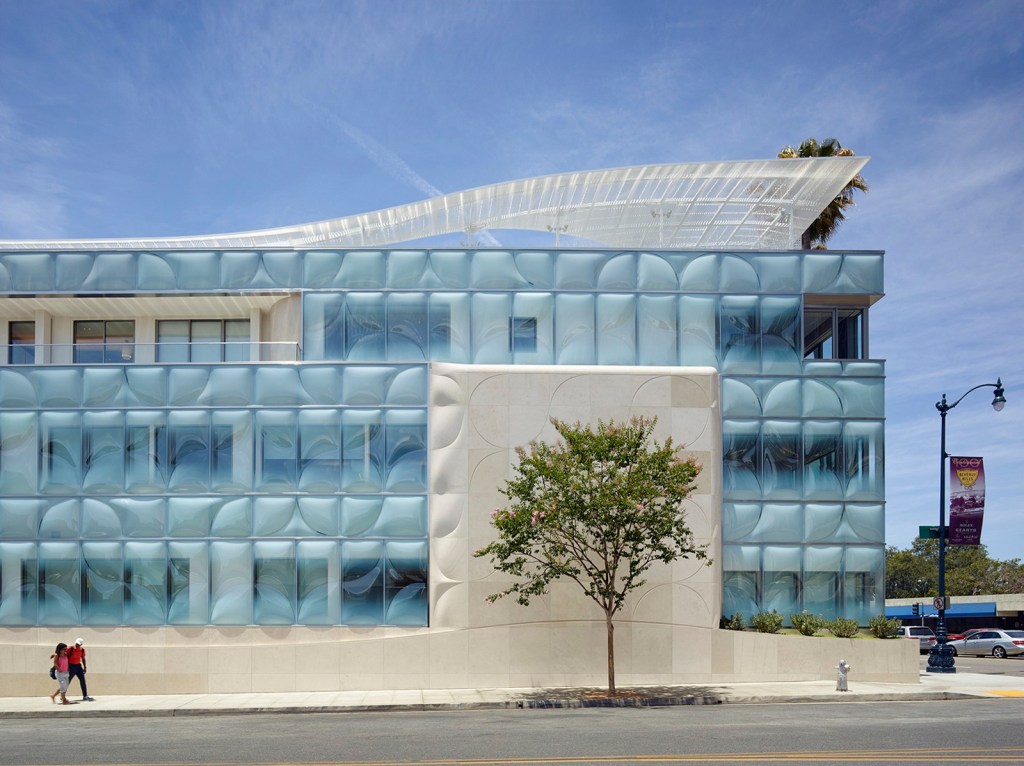
One of these new techniques comes in the form of glass slumping, a process that uses gravity and heat from a kiln to shape sheet glass using a mold. That means glass panels can escape the restrictions of only being flat. Because slumping allows for limitless possibilities, countless new textures and facades have arisen. One example includes the Gores Group Headquarters in California, a building that uses slumped glass panels with a printed PVB interlayer that is pressure-sealed on its exterior. This printed pattern filters views, provides privacy and greatly improves access to natural light, while the thickness of the panels reduces sound and vibration from the busy street outside. The appearance of the building also changes according to the time of day due to the different light refractions by the slumped glass.
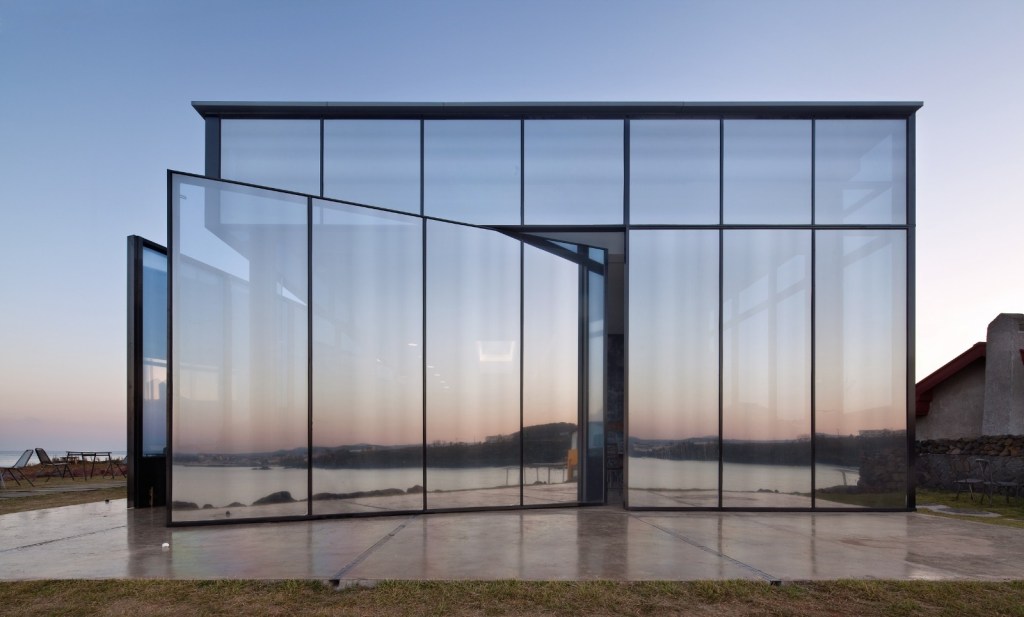
Besides slumping, another type of glass popular among new architects is mirrored glass, a special type of glass which has increased reflectivity by a very thin layer of metal or metallic oxide on the surface. It allows architecture to have a closer interaction with its surroundings, at the same time provides privacy and glare control. Platform Monsant, a restaurant located in Jeju that utilizes mirrored glass to achieve the goal of integrating the building into the surrounding landscape. The reflective glass fends off the view from outside as well as prevents the views of users inside and outside from crossing each other, thus providing those inside with a free environment where they can take a special rest in the projection of the nature around.
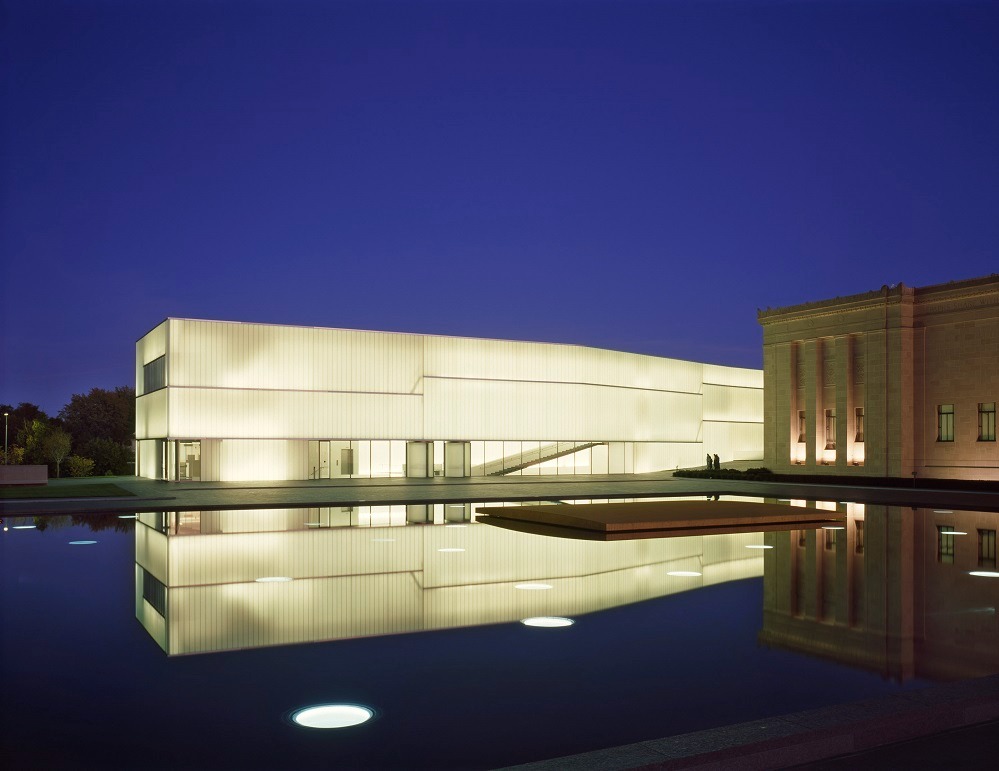
Further uses of glass have even changed its entire impression. Frosted glass, usually produced by sandblasting or acid etching of clear sheet glass, gives a rough and opaque quality to the material. Frosted glass has been used in a lot of new architectural designs, due to how it softens light and creates a distinct outline to the building itself. The Bloch Building, an addition to the Nelson-Atkins Museum in Kansas City uses frosted glass to achieve an appearance akin to a Japanese lantern. It is a series of five structures, referred to as “lenses”, that allow diffuse light to enter the galleries below and respond to the undulating topography outside. It also provides a modern spark to the original Beaux-Arts style building besides it that was constructed in 1933.
These examples of how glass is used in architecture demonstrate how a simple material can be expanded upon by innovation to achieve transformation, creating fresh ideas that help push design forward. With rapidly developing technology, we can foresee even more new techniques and methods of producing glass, fostering more exciting instances of the applications of glass to architecture in the future.
 HOME | Archive