By Talia Wang
3XN, a Danish architectural practice with head office in Copenhagen, recently completed the Grognon exhibition space dedicated to the history of digital technologies. Located in Namur, Belgium, at the confluence of two rivers and neighbouring the Roman citadel. However, unlike previous projects, this project sparked great public attention with its unique form and use of flowing curves. 3XN has always been an architectural firm focusing on the futuristic style of curves, exploring the endless possibilities of the future of architecture, breaking the boundaries of the restraint in the classic and modernist approach just a few decades ago.
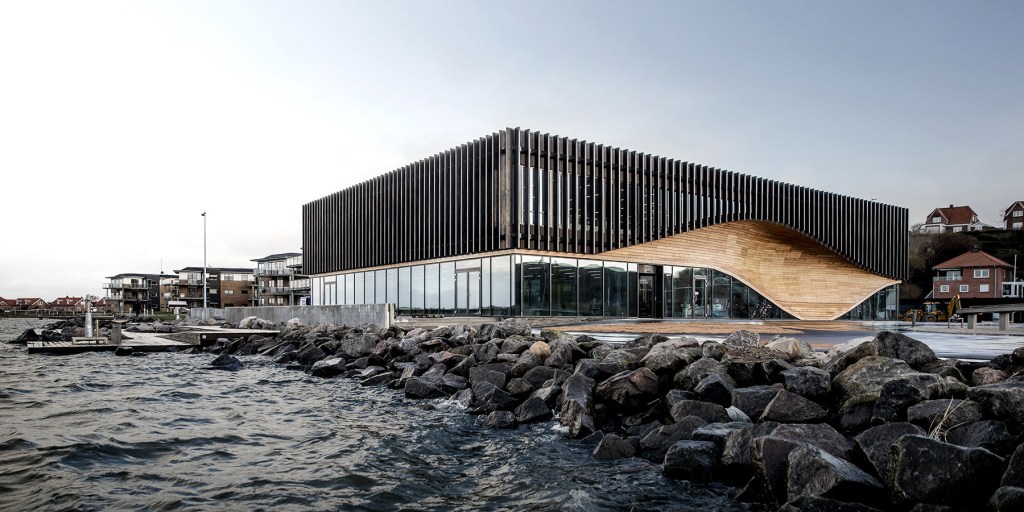
In particular, this article discusses the most recent project, Grognon exhibition space dedicated to the history of digital technologies. The structure’s shape is created by a sequence of organic curves that form one continuous gesture. This establishes a conversation with the surroundings while remaining respectful of the site’s heritage. The landscape-like form allows the historical park to remain on top of the structure, while the roof slopes down to the Meuse River, creating a tiered plaza with wide grassy stairs. This new public square facilitates a variety of activities, eg. urban festivals and street performances, while also providing the city with a new social area. The terraced slope continues with a riverside walkway and a floating platform where musical concerts may be held.
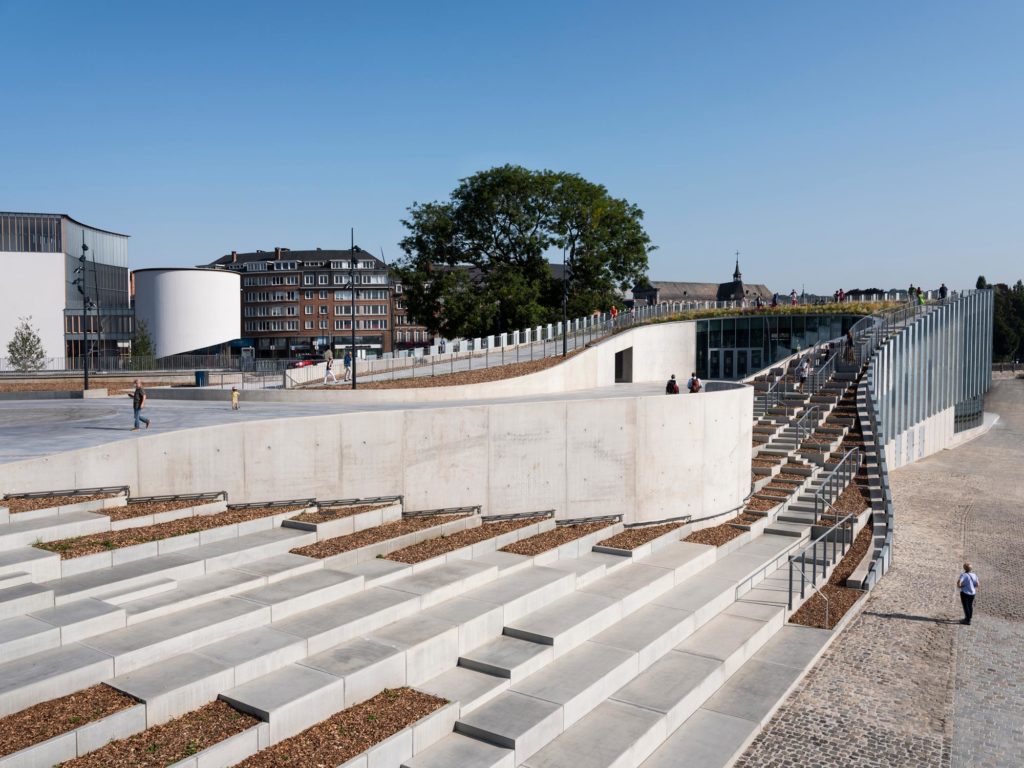
“The starting point was to merge the landscape and building into a single composition. One architectural concept, for both the public square and the cultural building, provides a facility that is simultaneously simple and straightforward and filled with experiences and variations. The square and the building together create a significant place and an identity for this unique historical location”
– Jan Ammundsen, Architect MAA, Senior Partner and Head of Design at 3XN.

This example of a building provides insight to how organic curves can be aesthetically and practically appealing for future architects as well. Curves are becoming increasingly common in current and futuristic architecture. Organic: shapes, methods and patterns modeled after those found in living systems. When applied to architecture, it is able to create a wonderful blend with the landscape. This integral approach is something that started out with landscape architects and is now being applied to more and more built infrastructures. Overall, Nature is an architect’s school. The creative possibilities of form, color, pattern, texture, proportion, rhythm, and growth are all demonstrated in nature. Organic architecture does not imitate nature but is concerned with natural materials, the site, and the people who will occupy the buildings.
References:
Other 3XN projects: https://3xn.com


Leave a Reply