Category: Uncategorized

  • In the Wake of the Bauhaus

    By Nicole Au

    Following the dismissal of Hannes Meyer in 1930, the appointment of leading avant-garde architect Ludwig Mies van der Rohe as the third and final director of the school marked the final stage of the Bauhaus movement. During his brief time as director, Mies van der Rohe discontinued the school’s manufacture of goods, but placed a greater emphasis on architecture within the curriculum. By 1932, the National Socialists—who had steadily gained increasing power and influence in German politics—gained control of the Dessau city council, and forced the closure of the school. Mies van der Rohe attempted to continue to lead the school as a private institution by moving the Bauhaus school to Berlin, where it continued to operate in a dilapidated factory for a brief 10 months without Nazi interference. Soon enough, the school began to face increasing pressure from Nazis, who firmly rejected Bauhaus’ divergence from Germanic tradition, and criticised the movement as a supposed front for communists. The Bauhaus school was permanently closed by Nazi authorities in April 1933, and the Bauhaus was dissolved a few months later on 10 August 1933.
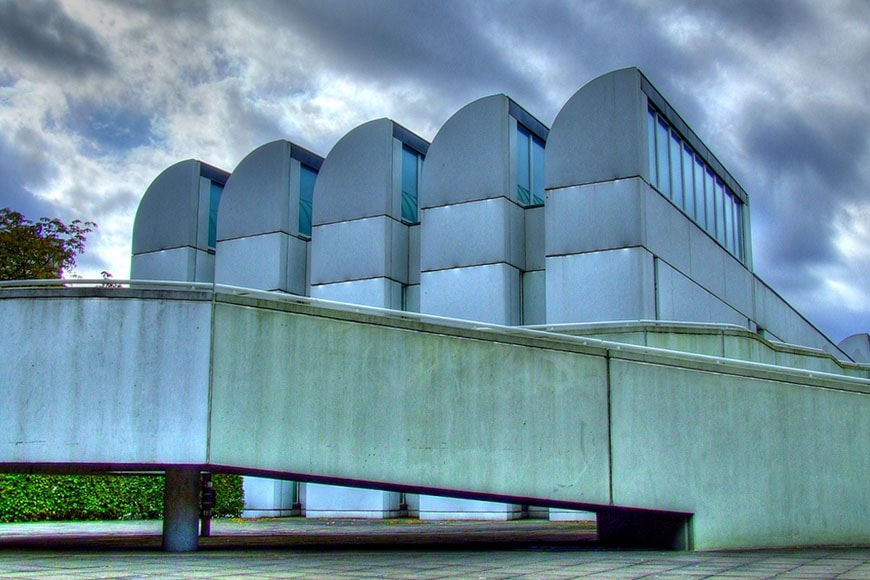
    The Bauhaus-Archiv Museum, Berlin. https://www.google.com/url?sa=i&url=https%3A%2F%2Fwww.inexhibit.com%2Fmymuseum%2Fbauhaus-archiv-museum-fur-gestaltung-berlin%2F&psig=AOvVaw0D9nfLYAF4iVRZeCFaMSEl&ust=1634290100624000&source=images&cd=vfe&ved=0CAsQjRxqFwoTCIjvz5nLyfMCFQAAAAAdAAAAABAD

    Despite its short lived period, Bauhaus stands as one of the most influential modern movements of all time, with the reverberations of its impact still felt today all over the world. During World War II, members of the Bauhaus faculty proceeded to flee Germany—many of which arrived in America, and continued to endorse the school’s teachings and philosophies. Notable members of the school, including Walter Gropius and Marcel Breuer established a major presence in the United States, designing a great number of landmarks exemplifying Bauhaus principles across the nation. The Bauhaus ‘diaspora’ influenced a new generation of architects and designers, which eventually led to the beginnings of other major architectural movements, including Midcentury Modern, and the International Style.
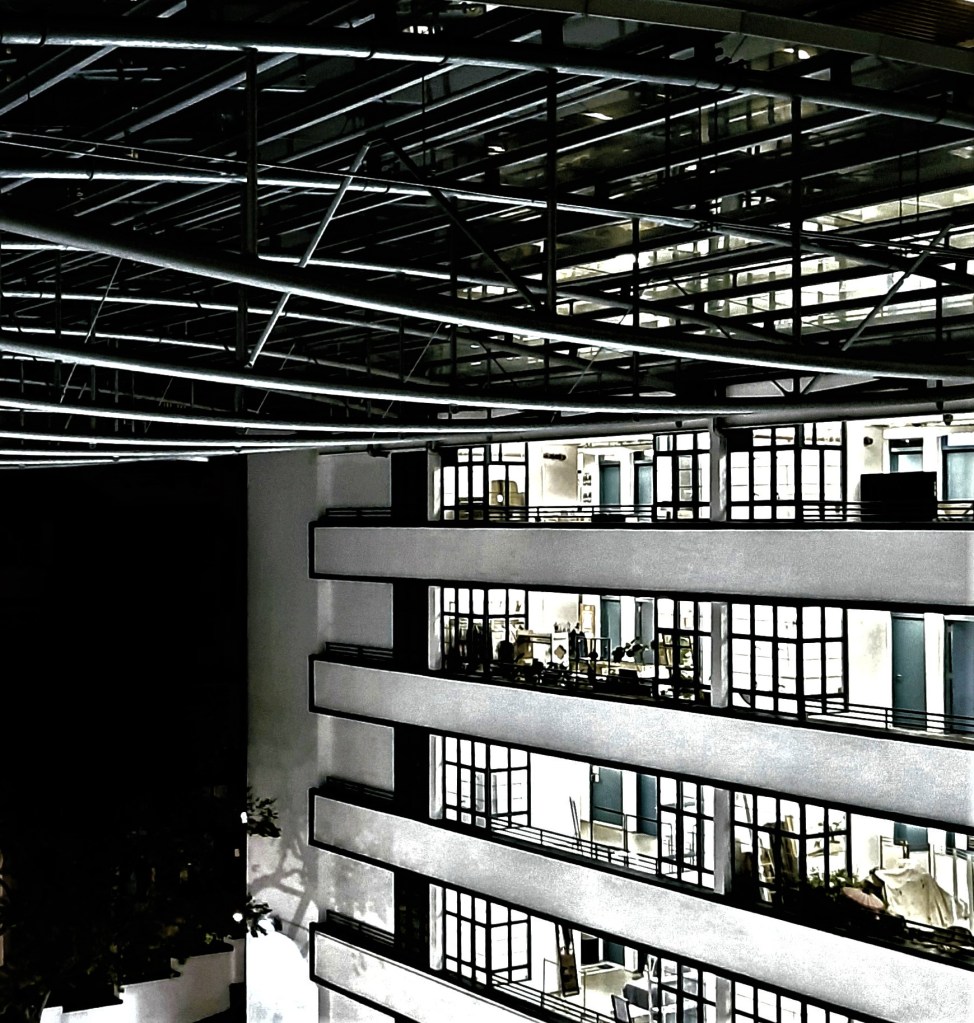
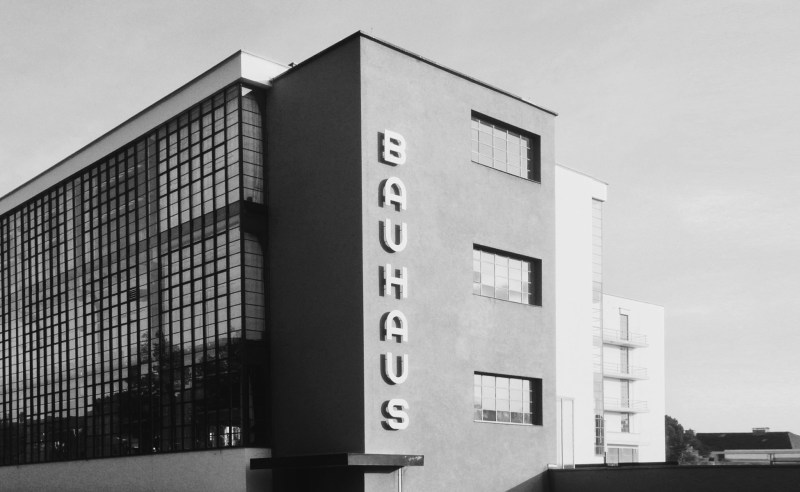
    PMQ, Sheung Wan, Hong Kong

  • The Bauhaus in Bloom

    By Kenny Lau

    If you’re interested in art or architecture, then you’ve probably heard of the fabled Bauhaus movement. From unifying creativity and technicality to inducing a new direction in design, the influence of the Bauhaus is undisputed. As art critic Wolf van Eckhart put it, “it helped to invent modern architecture; it altered the look of everything from the chair you are sitting in to the page you are reading now.” In spite of this, the Bauhaus was rooted in controversy and had faced a multitude of obstacles since its conception. 

    Image from https://www.grapheine.com/en/history-of-graphic-design/bauhaus-designers

    An amalgamation of the Grand Ducal Saxon Academy of Fine Arts and the Weimar Kunstgewerbeschule, The Staatliches Bauhaus (literally translating to The State Building House) was established in 1919. It consisted of pioneers who wanted to revolutionize the current method of art education, where fine arts were taught separately from craftsmanship, resulting in a gap between the social status between artist and craftsman. Their aim was to join together all art forms, as well as to eliminate the disparity between the craftsman and the artist. (“The artist is an exalted craftsman”) Ultimately, they were working towards a single creative expression through synthesizing various mediums. 

    Walter Gropius, an architect, was appointed as Director of the school. He strongly opposed academicism, not only requiring students to engage in all studies of art, but also naming students ‘apprentices’ and ‘journeymen’. Similarly, professors of craft techniques were ‘workshop masters’, while professors of theory and creativity were ‘masters of form’. The former helped apprentices build up a solid technical foundation, whereas the latter taught them Bauhaus ideologies and exposed them to the wonders of imagination. This attracted the likes of Paul Klee, Wassily Kandinsky and Johannes Itten, who became masters there. 

    In its early years, the Bauhaus immersed themselves in a utopian mindset, believing that they could overturn the materialist society and form a system of living based on unified arts. However, the impracticality of this goal surfaced as the school found itself drowning in financial issues due to their expensive products. Therefore, Gropius shifted his focus to industry and mass production. Bauhaus adopted the principle “form follows function”, stripping objects to their barest forms in an elegant manner. The success of this era could be seen in their acclaimed 1923 exhibition. 

    The new Weimar government withdrew financial support in 1925 due to political differences. As a result, the Bauhaus was forced to move to Dessau, where Gropius constructed the iconic Bauhaus building. Stressing the importance of affordability without compromising aesthetic appeal, the Bauhaus flourished, with new courses held and books published. Designs that exist even till today were created. Industrial materials, functionality, asymmetrical balance and minimalist colour schemes defined their work. Gropius handed over his directorship to Hannes Meyer in 1928, who further refined the curriculum. However, their prominence was again crushed by politics, as the Bauhaus was forced to close down by new nationalist parties in 1932. This was followed by a short-lived relocation to Berlin from 1932 to 1933. 

    The Bauhaus only spanned over 14 years. Yet, the mark they left in society is everlasting and has driven many to re-evaluate their stance on what design should be like. For more information, check out our article on the legacy and repercussions of the Bauhaus!